Few drives in the West pack in as much variety as a South Dakota to Yellowstone road trip. In a matter of days you move from the striped spires of the Badlands to the granite and pine of the Black Hills, across the ranch country and mountains of Wyoming, and into the geysers and canyons of the world's first national park. This guide lays out a practical route from Rapid City to Yellowstone, the stops we think are worth slowing down for, and how to come home with Badlands National Park photos you will actually want to print.
The big picture: picking your route
Most travelers base the South Dakota half of the trip around Rapid City, then head west on Interstate 90 into Wyoming. From there, you have two main ways to reach the park.
| Route | Enters Yellowstone at | Highlights | Consider |
|---|---|---|---|
| I-90 to Buffalo, US-16 over the Bighorns, then on to Cody | East Entrance | Cloud Peak scenery, Ten Sleep Canyon, the town of Cody | Mountain grades; the road from Cody to the park is beautiful but winding |
| I-90 to Sheridan, US-14 or 14A over the Bighorns, then Cody | East Entrance | Shell Canyon, high meadows, Bighorn Canyon area | US-14A is steep in places; check vehicle advisories |
| Through Montana toward Red Lodge and the Beartooth Highway | Northeast Entrance | One of the most dramatic alpine drives in the country, Lamar Valley wildlife | Beartooth is seasonal and weather-dependent; longer overall |
From Rapid City to Yellowstone's East Entrance by way of Cody is roughly 400 miles. That is doable in one long day, but you will enjoy it far more split across two, with a night in Buffalo, Sheridan or Cody.
Day 1 and 2: Badlands and the Black Hills
Badlands National Park
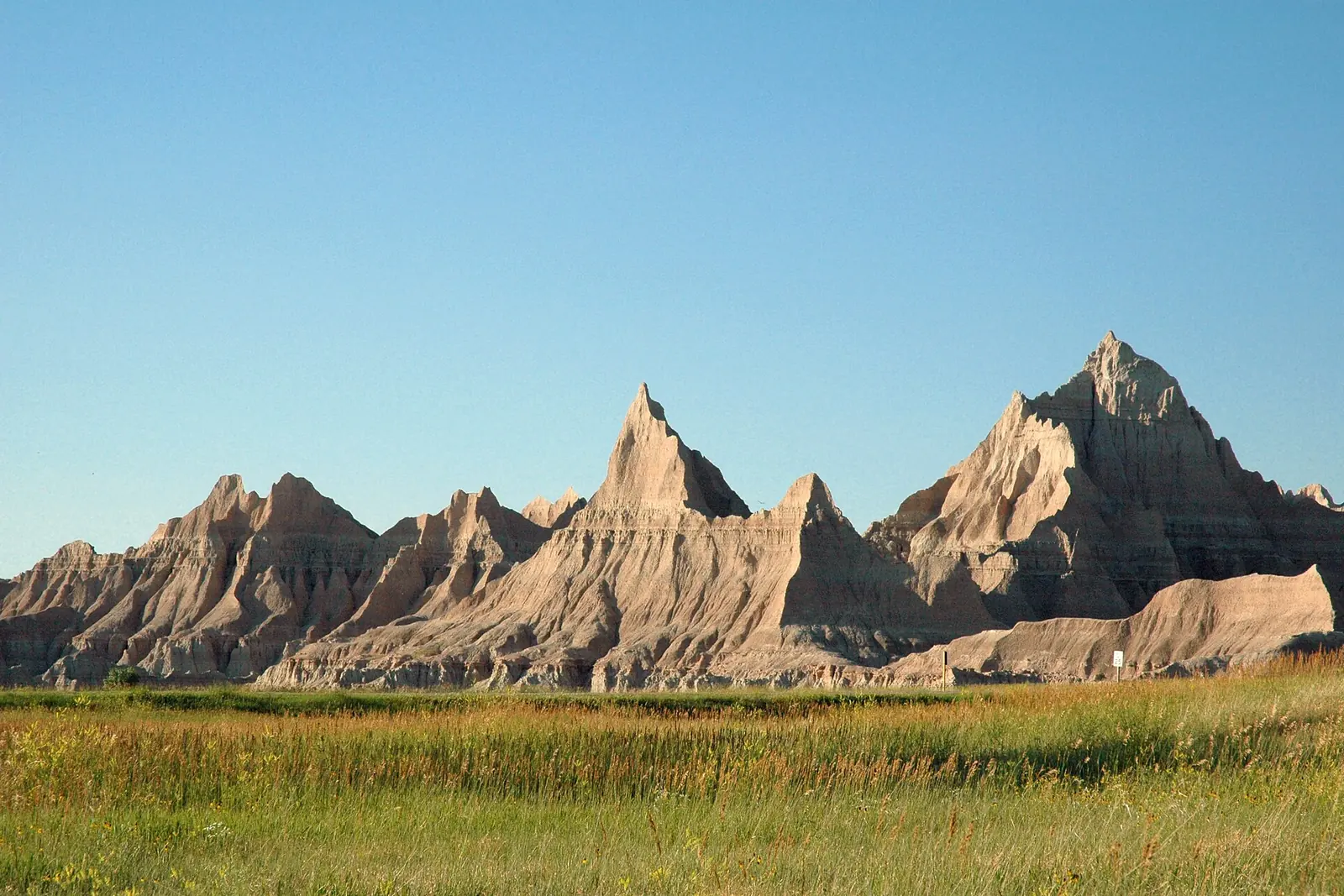
Badlands National Park sits about an hour east of Rapid City, so many travelers start there and work west. The Badlands Loop Road (SD-240) runs through the park and connects a string of overlooks and short trails. A few favorites:
- Door and Window trails. Short walks into the formations that give you a sense of scale.
- Yellow Mounds Overlook. Soft yellow and red bands that glow in low light.
- Pinnacles Overlook. A wide view over jagged ridges, popular at sunset.
- Sage Creek Rim Road. A gravel road where bison, pronghorn and prairie dog towns are often seen. Ask about road conditions after rain.
Plan to be in the park at sunrise or sunset if you can. Bring more water than you think you need; there is little shade, and summer days are hot.
The Black Hills
Back west, the Black Hills hold a dense cluster of stops. Mount Rushmore National Memorial is the famous one, and it is worth seeing early in the day before crowds build. Custer State Park is a highlight for many people, with the Wildlife Loop Road for bison and the Needles Highway for granite spires and narrow tunnels. Some tunnels are tight, so check size limits if you are driving a large vehicle or towing. Custer State Park charges an entrance fee; confirm the current pass options with the park.
Day 3: Across Wyoming
The drive across northern Wyoming is easy to treat as a transfer day, but it has some of the trip's quiet surprises.
- Devils Tower National Monument. A short detour off I-90 in northeastern Wyoming. The paved trail around the base is an easy, rewarding walk.
- The Bighorn Mountains. Whichever pass you choose, pull over at the overlooks. The change from prairie to alpine meadows in an hour of driving is striking.
- Cody. A practical overnight before the park, with plenty of lodging and restaurants. It also puts you a reasonable morning drive from the East Entrance.
Days 4 to 7: Yellowstone
Yellowstone is large, and the drive between its main areas takes longer than the map suggests, especially with wildlife traffic. Rather than trying to see everything, choose a base or two and explore from there.
A simple way to divide the park
- Lake and Canyon. Coming in from the East Entrance, you reach Yellowstone Lake first, then the Grand Canyon of the Yellowstone with its Upper and Lower Falls.
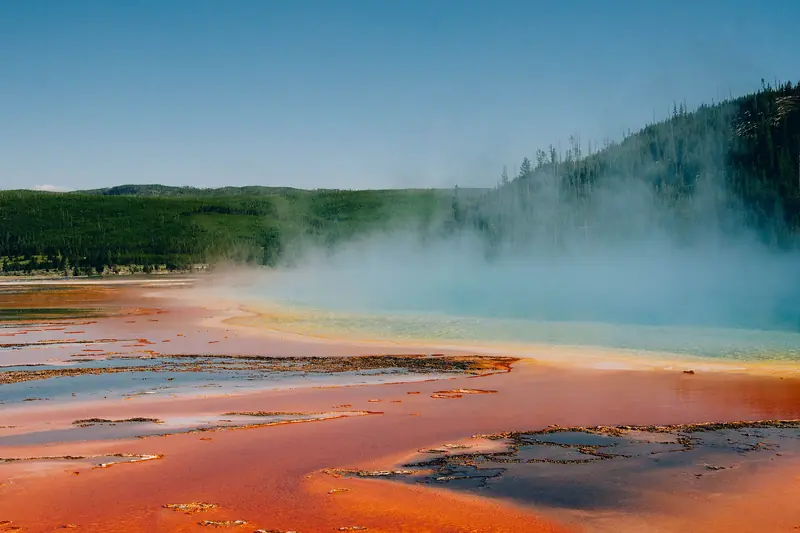
- Geyser basins. Old Faithful, Grand Prismatic Spring and the Upper, Midway and Lower geyser basins on the west side of the loop.
- Northern range. Mammoth Hot Springs and the Lamar and Hayden valleys, which are well known for wildlife watching.
Lodging inside and near the park fills early in summer. Book well ahead, or plan to stay in gateway towns.
Photographing the trip
A road trip like this rewards a little photographic planning. A few notes that apply across the whole route:
- Chase the edges of the day. In open landscapes like the Badlands, sunrise and sunset do almost all of the work. Our golden hour photography guide explains how to plan around them.
- Use a longer lens for wildlife. A telephoto lets you keep a safe distance and still fill the frame. Never approach animals for a photo.
- Put people in the landscape. A small figure on a ridge gives scale to formations that otherwise look abstract.
- Protect your gear. Dust in the Badlands and steam near geysers can both be hard on cameras. A lens cloth and a simple rain cover help.
- Back up nightly. Copy each day's photos to a laptop or second card in the motel room.
Packing for a South Dakota to Yellowstone road trip
- America the Beautiful pass or plan for individual park entrance fees
- Offline maps, since cell service drops out in parts of the route
- Layers: hot Badlands afternoons and cold Yellowstone mornings can fall in the same week
- Refillable water bottles and a small cooler
- Binoculars for wildlife
- Sun protection: hat, sunscreen and sunglasses
- Bear spray if you plan to hike in Yellowstone, and know how to use it
- Spare camera batteries and memory cards
Making it your own
A South Dakota to Yellowstone road trip works as a family vacation, a photo pilgrimage or an anniversary escape. If you are celebrating something, a short portrait session against a big Western backdrop is a lovely souvenir; our anniversary photo ideas have tips for making that feel natural. For more road trips and weekend wanderings, see our lifestyle journal and our Lake Powell guide for another stretch of the Southwest worth the drive.
Questions, answered
How long is the drive from Rapid City to Yellowstone?
Driving to the East Entrance by way of Cody, Wyoming is roughly 400 miles and commonly takes about seven hours without long stops. Mountain passes, construction and wildlife can add time, so check current conditions before you leave.
How many days do you need for a South Dakota to Yellowstone road trip?
A week is a comfortable minimum: two days for the Badlands and Black Hills, a long driving day or two across Wyoming, and at least three days inside Yellowstone. Ten days lets you slow down.
When is the best time to do this road trip?
Late spring through early fall is most practical. Some Yellowstone entrance roads and high mountain highways close seasonally, so confirm opening dates with the National Park Service and state transportation departments.
What is the best time of day to photograph Badlands National Park?
Sunrise and sunset, when low light brings out the color bands and texture in the formations. Midday light tends to flatten the landscape and wash out the color.
First published in May 2018 and fully rewritten and updated for 2026. Details like permits, fees and hours change — confirm them with the venue or land manager before you go.