The flowers fade, the cake gets eaten and the dress goes into a closet. The photos are what you keep. That is why knowing how to find your wedding photographer is worth a little more effort than most vendor decisions. The good news is that it does not have to be overwhelming. With a clear idea of the style you love, a smart way of reviewing portfolios and a solid list of questions to ask a wedding photographer, you can narrow a long list down to the right person with confidence.
How to find your wedding photographer, step one: know what you like
Before you look at anyone's prices, spend an evening saving wedding photos you love. Do not worry about who took them. After you have twenty or thirty, look for patterns.
- Editing style. Light and airy, warm and golden, true-to-color, moody and dark, or black and white heavy? Editing is the most visible part of a photographer's style and the hardest to change after the fact.
- Approach. Do you love candid, documentary moments, or carefully posed and polished portraits? Most photographers do both, but they usually lean one way.
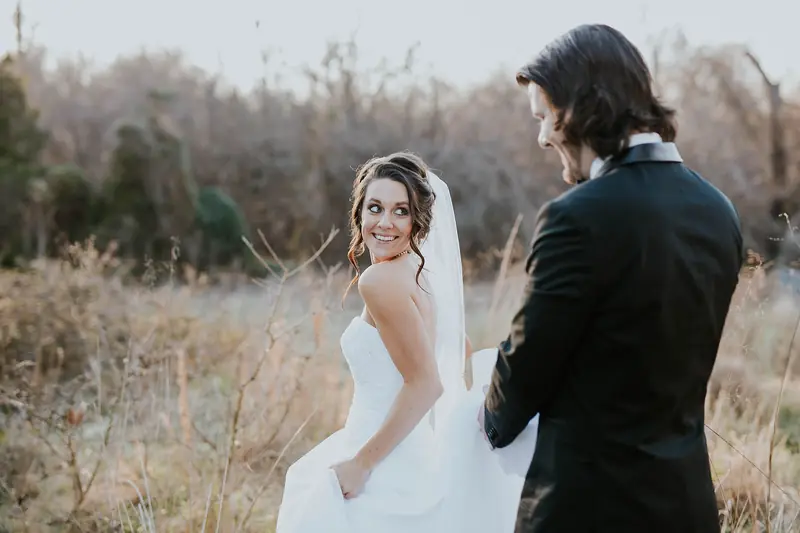
- Composition. Wide, dramatic landscapes with tiny couples, or close, emotional portraits?
Write three or four words that describe what you saved. Those words become your filter.
Step two: build a shortlist
Good places to start include recommendations from recently married friends, your venue's past weddings, local wedding vendors you trust, and searches that combine your city or venue with "wedding photographer." Instagram and directories can help too, but use them to find names, not to decide.
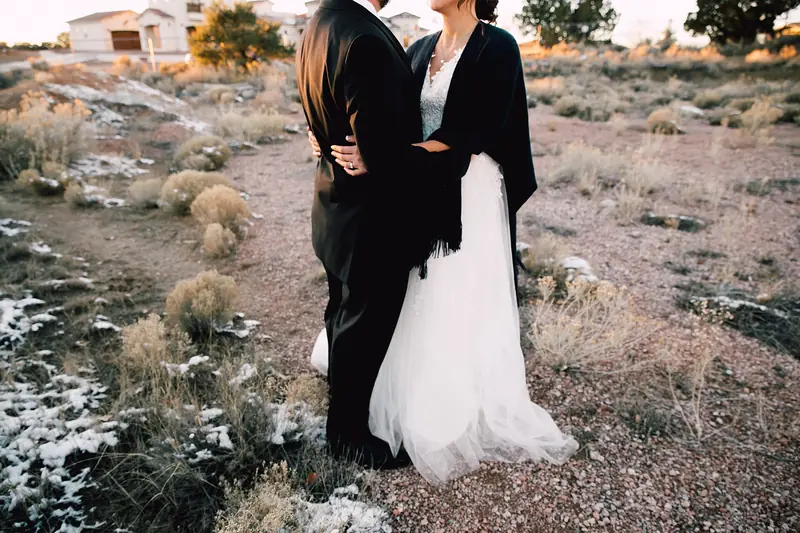
If you are wondering how to find your wedding photographer when you do not know anyone recently married, start with your venue. Either way, aim for five to eight names whose work matches your words from step one. If you are getting married somewhere with distinct light and landscape, like the desert Southwest, look for photographers who clearly know how to work in it. Bright sun, harsh shadows and fast sunsets take experience.
Step three: look at full galleries
A portfolio is a highlight reel. Every photographer has stunning shots. What you need to see is consistency across an entire wedding. Ask each photographer on your shortlist for two or three full galleries, ideally from weddings similar to yours in size, season or setting.
When you look through them, pay attention to:
- How they handle low light at receptions and indoor ceremonies
- Whether family formals are well organized, sharp and evenly lit
- How skin tones look across different people and lighting
- Whether the moments feel genuine
- Details, getting ready and the little in-between frames you will treasure later
Step four: compare packages honestly
Packages vary a lot, and two prices that look similar can include very different things. Line them up side by side. A simple table helps:
| What to compare | Why it matters |
|---|---|
| Hours of coverage | Determines whether you get getting ready, the exit or both |
| Second shooter | Two angles on the ceremony and coverage of both sides getting ready |
| Engagement session | Practice in front of the camera and a chance to get comfortable |
| Number of images and delivery time | Sets expectations for the final gallery |
| Usage rights and prints | Whether you can print anywhere or order through the photographer |
| Albums | Often a significant add-on; included in some packages |
| Travel fees | Important for destination or remote venues |
For a sense of typical price ranges and what moves the number, read our breakdown of how much wedding photography costs, which includes an estimator.
Questions to ask a wedding photographer
Once you are down to two or three, set up a call. These are the questions we think matter most.
About their work
- How would you describe your style, and how much of the day is posed versus candid?
- Have you photographed at our venue, or somewhere similar?
- Can we see a full gallery from a wedding like ours?
- How do you handle harsh midday light or a dark reception space?
About the day
- Will you help us build a photo timeline?
- How do you organize family formals?
- Who is your second shooter, and can we see their work?
- What do you need from us, such as meals, breaks or a shot list?
About the business
- What is your backup plan if you are sick or have an emergency?
- Do you carry backup gear and shoot to two memory cards?
- How and for how long are our photos backed up after delivery?
- What is the payment schedule and cancellation or rescheduling policy?
- Do you carry liability insurance? Many venues require it.
Listen to how they answer, not just what they say. A good photographer will be clear, calm and specific, and will ask you plenty of questions in return.
Step five: read the contract
A professional photographer will always use a written contract. Read it fully before signing. Look for the date, hours, location, deliverables, delivery timeline, payment schedule, cancellation and rescheduling terms, usage rights and what happens if they cannot attend. If something you discussed is not in writing, ask for it to be added.
- Saved 20 to 30 photos you love and named your style
- Built a shortlist of five to eight photographers
- Confirmed date availability
- Reviewed at least two full galleries from each finalist
- Compared packages side by side
- Had a call or meeting with your top choices
- Read the full contract before signing
- Paid the retainer and saved a copy of the contract
After you book
The relationship does not end at the contract. Book an engagement session if you can; it is the best way to get comfortable in front of the camera. Share your timeline as it develops, introduce your photographer to your planner or coordinator, and send a short list of must-have family groupings a few weeks before the wedding. Our wedding photography timeline guide walks through how to schedule everything, and if you are planning engagement photos, our guide to what to wear for engagement photos will help.
Learning how to find your wedding photographer takes a few weeks of looking, but it is time well spent. When you can relax around your photographer, your photos look like you. More planning resources are on our weddings page.
Questions, answered
How far in advance should we book a wedding photographer?
Many couples book nine to twelve months ahead, and popular photographers in busy seasons can fill sooner. If your date is flexible, a weekday or off-season date often opens up more options.
Is it a red flag if a photographer will not show full galleries?
It is worth asking why. Highlights show a photographer's best frames, while a full gallery shows how they handle the whole day, including dark receptions and family formals.
Should we meet our photographer before booking?
A video call or coffee is a great idea. You will spend more time with your photographer on the wedding day than with almost any other vendor, so feeling comfortable matters.
Do we need a second photographer?
For larger weddings, separate getting-ready locations or a big guest count, a second shooter can be valuable. For small weddings and elopements, one photographer is often plenty.
First published in Jun 2018 and fully rewritten and updated for 2026. Details like permits, fees and hours change — confirm them with the venue or land manager before you go.