Maid of honor duties are easy to romanticize and hard to pin down. The title sounds ceremonial, but the job is mostly practical: you are the bride's point person, her calm second opinion, and the friend who quietly makes sure the bridal party shows up where it needs to be. This guide breaks the role into what you actually own, what you share, and what you can happily leave to the planner or the family.
The short version: what a maid of honor is really for
If you remember nothing else, remember this: your main job is to reduce the bride's load, not add to it. Every task below flows from that idea. Traditions vary a lot by family, culture, and budget, so treat this as a menu rather than a contract. The best first step is a simple conversation where you ask, "What do you actually want help with?" and write the answers down.
Most maid of honor duties fall into four buckets:
- Support: emotional backup, decision-making help, and an honest opinion when asked.
- Coordination: keeping the bridesmaids informed about dates, attire, and costs.
- Events: helping plan the bridal shower and the bachelorette, often alongside others.
- Wedding day: logistics, timeline-keeping, and being the bride's right hand from hair and makeup to send-off.
Early months: listening, dress shopping and the group chat
In the first few months after the engagement, the most useful thing you can do is listen. Couples get flooded with advice. You can be the person who asks good questions instead: What kind of day do you picture? Who absolutely has to be there? What are you worried about?
Wedding dress shopping
Dress shopping is often the first big event you attend. A few things make it go better:
- Ask who else is coming. Smaller groups usually make for clearer decisions.
- Know the budget before the first appointment so you can gently steer away from dresses that will only cause heartache.
- Take photos and notes for her (with the shop's permission). After four or five dresses, they start to blur.
- Give an honest but kind opinion when asked, and keep it about how she seems to feel, not what you would wear.
Bridesmaid dresses and the group chat
You will likely be the bridesmaids' main contact. Once the bride chooses a direction, share it clearly in one message: the color or palette, where to order, the deadline, and the expected cost range. Pin it. People miss things in busy group chats, and a single clear source saves dozens of follow-up questions.
The bridal shower
The bridal shower is where many maids of honor feel the most pressure. In some families a mother or aunt hosts; in others the bridal party does. Clarify who is hosting before you start booking anything.
If you are leading the planning, work through it in this order:
- Guest list: Get it from the bride or her family. Shower guests are typically people who are also invited to the wedding.
- Date and place: Many showers happen one to three months before the wedding. A home, a backyard, or a restaurant's private room all work.
- Budget and split: Agree on a number and how it will be shared before buying decorations or food.
- Format: Brunch, tea, an afternoon open house, a couples' shower. Match it to the bride's personality, not to a theme you saw online.
- Gift tracking: Assign one person to write down who gave what. Thank-you notes are much easier with a clean list.
Games are optional. Some brides love them; others would rather just talk and eat. Ask.
The bachelorette
The bachelorette has the widest range of any pre-wedding event: a dinner downtown, a weekend cabin trip, a pool day, a destination trip. The most important thing is that it matches what the bride wants and what the group can actually afford. If some bridesmaids cannot swing a trip, consider a local night they can join, or a two-part plan where the expensive part is optional.
Collect money early, keep a simple shared spreadsheet, and confirm reservations a week out.
Maid of honor duties in the final month
As the date gets close, your role becomes more logistical. This is the stretch where a little organization prevents most wedding-day stress.
- Confirm every bridesmaid has her dress, alterations finished, and shoes.
- Get a copy of the wedding day timeline and know where the bridal party needs to be and when.
- Learn the names of the coordinator and photographer so you can find them quickly.
- Draft your toast and practice it out loud at least twice.
- Pack an emergency kit (see below).
- Offer to handle a few small errands: picking up the veil, dropping off decor, confirming the hair and makeup start time.
If the couple has a photography timeline, ask for it. Knowing when family photos happen, and who is in them, lets you round people up without the bride having to. Our guide to finding the right wedding photographer covers how those timelines usually come together.
On the wedding day
On the day itself, think of yourself as the bride's buffer. Vendors, relatives, and well-meaning guests will all want a minute of her time. You can field many of those questions so she can stay present.
Getting ready
- Keep the getting-ready room tidy. Clear water bottles, bags, and hangers out of the background before the photographer arrives. It makes a real difference in the photos.
- Make sure the bride eats something and drinks water.
- Have her dress, shoes, jewelry, invitation, and rings gathered in one spot for detail photos.
- Help with buttons, bustles, and the veil, and learn how the bustle works ahead of time.
During the ceremony
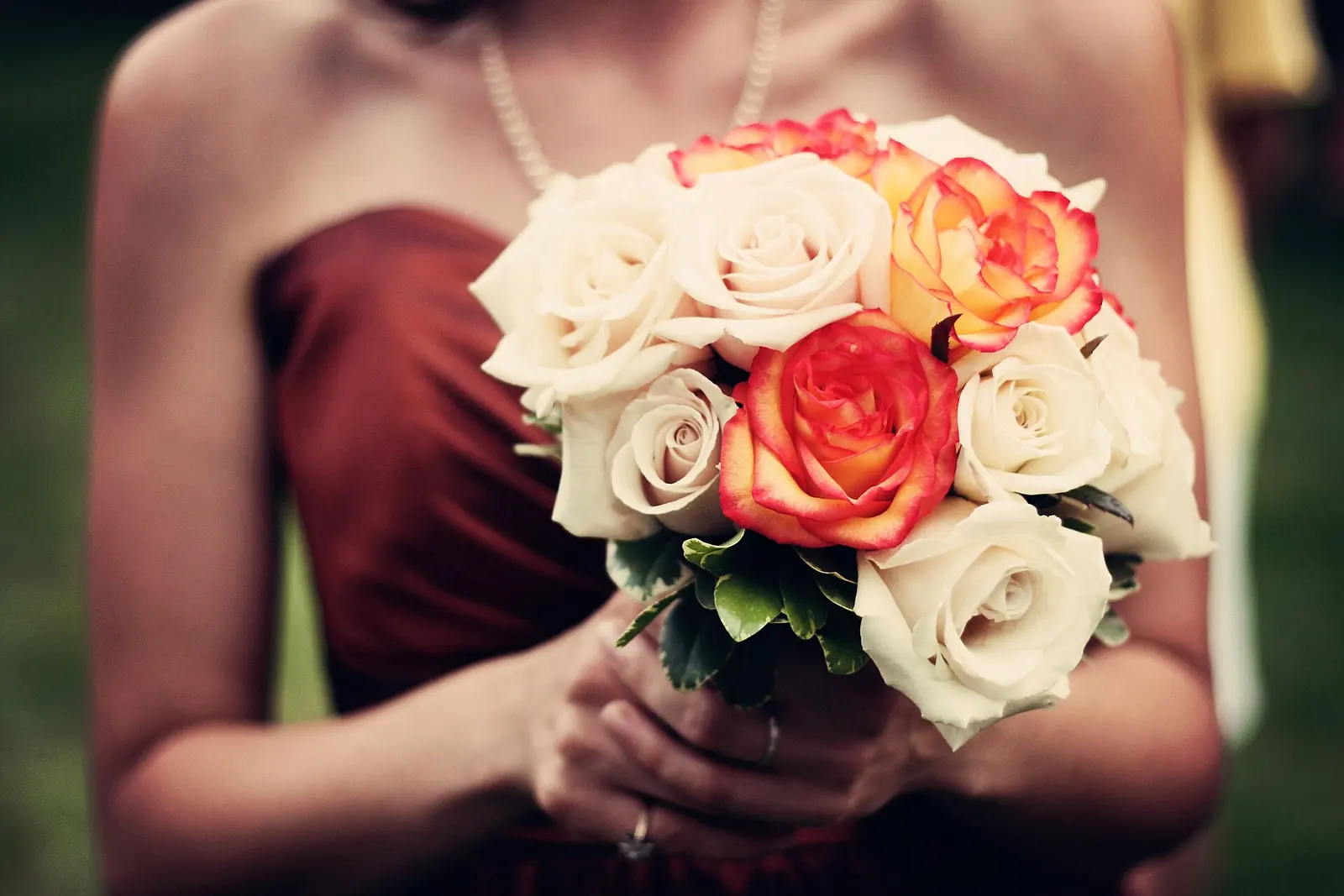
You will typically walk just before the bride, stand closest to her, and hold her bouquet during the vows and ring exchange. If there is a long train or veil, straighten it once she reaches the front. Some couples also ask the maid of honor to sign the marriage license as a witness; check the requirements in your state.
At the reception
Give your toast, then relax a little. Stay alert to the timeline, help gather people for the exit, and make sure gifts, cards, and personal items end up with the right person at the end of the night. If you are planning a send-off, our roundup of unique wedding exits is a good place to look for ideas.
What to pack in a maid of honor emergency kit
A small kit saves more weddings than any toast. Keep it simple:
- Safety pins, a small sewing kit, and fashion tape
- Stain remover pen and a white cloth
- Pain reliever, bandages, blister pads, and antacids
- Bobby pins, hair ties, and travel hairspray
- Tissues, mints, and lip balm
- Phone charger and a small snack
Maid of honor duties that are not yours
It is just as useful to know where your job stops. You are not the wedding planner, the mediator for every family disagreement, or the person who pays for everything. If the couple has a coordinator, let that person run vendors and timing. Your job is to support the bride, keep the bridal party moving, and enjoy the day with your friend. For more on how the whole day comes together, browse our wedding guides.
Questions, answered
Does the maid of honor pay for the bridal shower?
Not necessarily. Showers are often hosted by a mother, aunt, or friend, and costs are commonly split among hosts or bridesmaids. Talk about money early and openly so no one is surprised.
Does the maid of honor have to give a speech?
It is customary at many receptions, but it is not mandatory. If public speaking is genuinely hard for you, tell the couple early; a short toast or a written letter read by someone else is perfectly fine.
What is the difference between a maid of honor and a matron of honor?
Only marital status. A matron of honor is married; a maid of honor is not. The responsibilities are the same, and some couples have one of each.
Can you say no to being a maid of honor?
Yes. If time, money, or distance makes it unrealistic, a kind and early conversation is better than overpromising. Many people offer to help in a smaller role instead.
First published in Mar 2017 and fully rewritten and updated for 2026. Details like permits, fees and hours change — confirm them with the venue or land manager before you go.